
Cybercab Unveiled: Tesla’s Purpose-Built Robotaxi and the Road to a Driverless Future
Tesla Cybercab unveiled: Explore the revolutionary steering-wheel-free Robotaxi, 2026 production plans, and how it will transform transportation with affordable autonomy.
TESLA
1/2/20262 min read
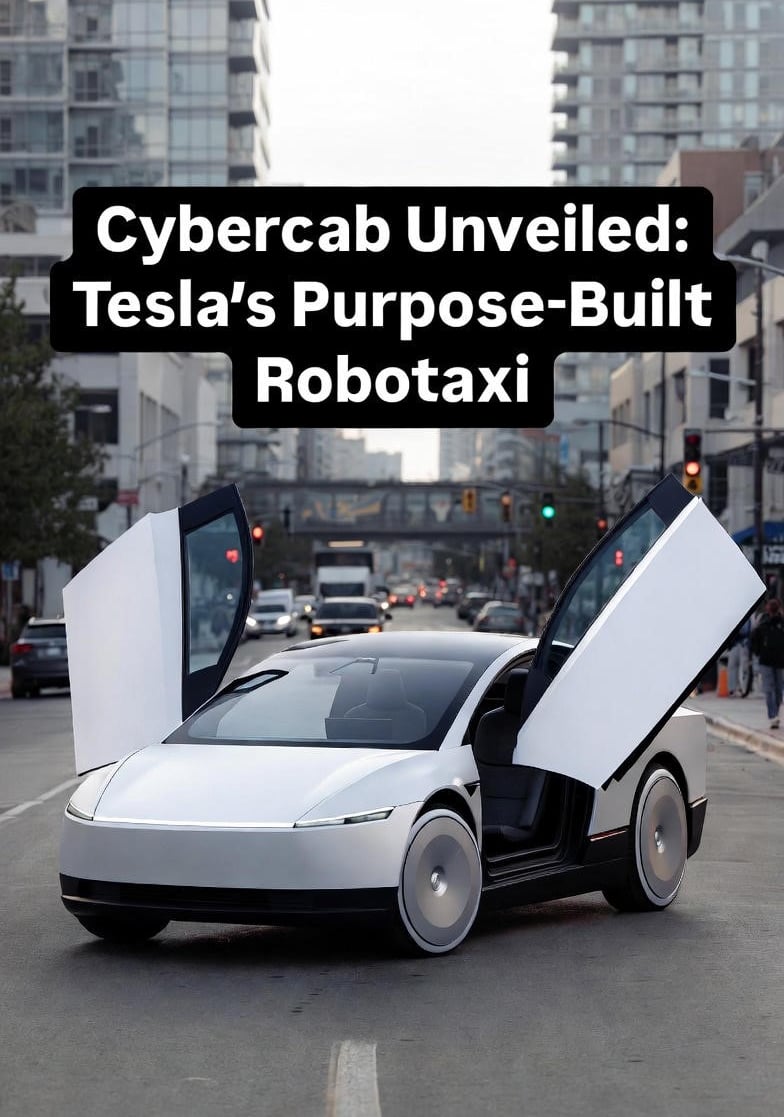
Elon Musk first revealed the Cybercab — Tesla’s dedicated, steering-wheel-free Robotaxi — in October 2024, promising a vehicle designed from the ground up for full autonomy. As we enter 2026, the pieces are finally coming together for mass production and widespread deployment.
Unlike the current Robotaxi service that uses modified Model Y vehicles, the Cybercab is a clean-sheet design: a sleek two-seater with inductive charging, butterfly doors, and no controls for human drivers. Tesla claims production costs will be under $30,000 per unit, making it one of the most affordable vehicles in its class while offering unmatched efficiency for ride-hailing.
The real game-changer is the business model. Owners will be able to add their Cybercabs to the Tesla Network, turning idle vehicles into income-generating assets. Musk estimates a well-utilized Robotaxi could gross over $100,000 annually in high-demand areas, with owners keeping the majority after Tesla’s platform fee. This could dramatically accelerate adoption and make personal car ownership optional for many.
Progress in 2025 laid critical groundwork: the supervised Robotaxi service launched in Austin, expanded gradually, and demonstrated reliable performance. Late-year unoccupied testing on public roads showed the system handling complex urban scenarios without intervention. These real-world miles are feeding directly into the unsupervised FSD software that will power the Cybercab fleet.
With production lines gearing up in 2026, regulatory discussions advancing in key states, and Tesla’s vast data advantage growing daily, the timeline for large-scale driverless operations feels increasingly realistic.
The implications go far beyond convenience. Widespread Robotaxi adoption could slash accident rates (since human error causes the vast majority of crashes), reduce traffic congestion through optimized routing, and make transportation accessible and affordable for everyone — including those who cannot drive.
We’re standing at the edge of a transportation revolution that could rival the impact of the smartphone. The Cybercab isn’t just a new car — it’s the foundation of a new mobility ecosystem.
Are you excited for a world where your car works for you while you sleep? Let me know in the comments!
Stay tuned to Grok Musk World for the latest on Tesla, autonomy, xAI, and more.
Subscribe now and never miss an update.
Upcoming: Elon Musk’s xAI Revolution – How Grok Is Changing the World (pre-order details soon).
#Tesla #Cybercab #Robotaxi #Autonomy #ElonMusk #FSD
Copyright © 2025 Grok Musk World
Connect with us
Prefer privacy-first search? Find us on DuckDuckGo.com, Brave.com Search & Kagi.com : grokmuskworld.com