
Tesla Robotaxi Launch 2026: Cybercab Production Ramp, Fleet Rollout Timeline, and Earnings Potential
Tesla Robotaxi 2026 updates: Cybercab production ramp, unsupervised FSD rollout, fleet expansion, and owner earnings potential on the Tesla Network.
TESLA
1/8/20262 min read
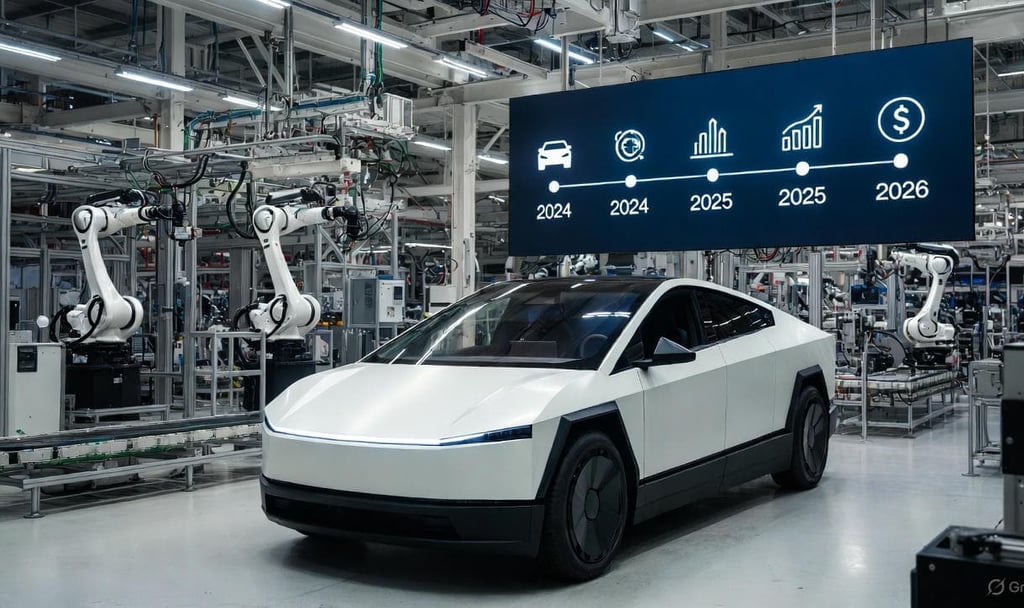
Elon Musk has repeatedly stated that 2026 will be the year Tesla transitions from supervised Full Self-Driving to widespread unsupervised autonomy and the official launch of the Robotaxi network. With FSD v13 showing dramatic improvements in real-world reliability, the pieces are falling into place for the long-promised Cybercab rollout.
Current Status of Cybercab Production (January 2026)
Pilot production is already underway at Giga Texas using the unboxed manufacturing process introduced in late 2025.
Tesla aims to produce thousands of units in the first half of 2026, ramping to hundreds of thousands annually by year-end.
Target price remains under $30,000 (before incentives), making it one of the most affordable dedicated autonomous vehicles ever designed.
Design highlights: no steering wheel or pedals, inductive charging, butterfly doors, two-seater layout optimized for ride-hailing.
2026 Fleet Rollout Timeline
The launch will begin with owner-operated vehicles added to the Tesla Network, followed by Tesla-owned fleet scaling in 2027.
Earnings Potential for Owners
Musk has estimated that a well-utilized Cybercab in high-demand areas could generate $20,000–$40,000 in annual profit for owners after Tesla’s platform fee (likely 20–30%).
Key factors:
Utilization rate: 50–70% of the day in busy cities.
Revenue per mile: ~$0.30–$0.50 (competitive with Uber/Lyft).
Operating costs: Extremely low (~$0.20/mile) due to electric efficiency and no driver.
Tesla Network model: Owners add their Cybercab to the fleet; Tesla handles routing, payments, and app integration.
This passive income model could make personal car ownership optional for many and accelerate fleet growth.
Challenges & Realistic Outlook
Regulatory approval remains the biggest hurdle — unsupervised operation requires state-by-state clearance.
Competition from Waymo, Cruise, and Zoox is intensifying.
Safety data: Tesla must continue demonstrating near-zero critical interventions to gain public trust.
Despite these hurdles, 2026 is shaping up to be the year Robotaxi moves from concept to reality. With Cybercab production ramping and FSD improving weekly, the future of urban mobility is arriving faster than most expected.
Are you planning to add a Cybercab to the Tesla Network in 2026? Share your thoughts in the comments!
Stay tuned to Grok Musk World for the latest on Tesla, xAI Grok, SpaceX, and more.
Subscribe now and never miss an update.
Upcoming: Elon Musk’s xAI Revolution – How Grok Is Changing the World (pre-order soon).
#Tesla #Robotaxi #Cybercab #FSD #ElonMusk #Autonomy2026
“Follow @GrokMuskWorld on X for daily updates”
Copyright © 2025 Grok Musk World
Connect with us
Prefer privacy-first search? Find us on DuckDuckGo.com, Brave.com Search & Kagi.com : grokmuskworld.com